


Empowering Women to Lead, Thrive, and Rise Together
Women Ahead is the premier support network for ambitious women in business and professional sectors, offering a trusted community, strategic growth tools, and real-world opportunities to elevate their personal and professional journeys. Through regional hubs and a dynamic online platform, we empower women to connect, collaborate, and create lasting impact locally, nationally, and globally.
Our Mission
Women Ahead was launched in 2001 to encourage, support and connect women in business and the professions in Dundee and Angus. It is an inclusive, supportive and inspirational group of women who wish to make the most of themselves, their careers and family life. We support, promote, empower and recognize the business women of Dundee and Angus.
Our Plan
We are committed to empowering Dundee and Angus businesswomen to achieve success on their own terms. We strive to provide opportunities for women to connect with and support each other. We deliver programs that contribute to the personal and professional development of our members, meeting their needs at the right time in the right way.
Our Vision
We are here to shape the future of business women in Dundee and Angus by providing opportunities for development, fostering valuable connections, and facilitating member success through business and career growth; by providing a forum for discussion, development and networking, for like minded individuals across various industries.

We are honoured to be one of the Association of Scottish Businesswomen’s eight associate groups. As one of our Women Ahead member perks, ASB membership is free. As a result, you can expand your professional network and take advantage of member prices to attend affiliate group events. On the ASB website, you may get complete information on the other affiliates and ASB activities like conferences and banquets. As long as you belong to an affiliate group, you are still an ASB affiliate member.
The Benefits
Professional women who live and work in Dundee and Angus, who own their business or affiliates, or women pursuing a career in commerce, industry, academia, law, accountancy or insurance professions are welcome to apply for membership.
Make New Contacts
Networking is about sharing and forming trust while helping one another toward goals. Regularly engaging with your contacts and finding opportunities to assist them helps to strengthen the relationship. By doing this, you sow the seeds for reciprocal assistance when you need help to achieve your goals.
Skills & Experience
Gaining the advice of experienced peers is an important benefit of networking. Discussing common challenges and opportunities opens the door to valuable suggestions and guidance. Offering genuine assistance to your contacts also sets a strong foundation for receiving support in return when you need it.
Group Of Talented Women
Networking is a great opportunity to exchange best practice knowledge, learn about the various business techniques of your peers and stay abreast of the latest industry developments. A extensive network of well informed, interconnected contacts means broader access to new and valuable information.
Learn, Improve Or Develop
Your network can be an excellent source of new perspectives and ideas to help you in your role. Exchanging information on challenges, experiences and goals is a key benefit of networking. Similarly, offering helpful ideas to a contact is an excellent way to build your reputation as an innovative thinker.
Invest In Your Career
Being visible and getting noticed is a benefit of networking that is essential in career building. Regularly attending professional and social events will help to get your face known. You can then help to build your reputation as being knowledgeable, reliable and supportive by offering useful information or tips to people who need it.
Complimentary Membership
By joining us, you will also receive a complimentary annual membership to The Association of Scottish Business Women offers access for Women Ahead members to networking, knowledge and mentoring opportunities across Scotland. Members come from every sector, age group, and level of experience and responsibility.
Make An Investment In Your Connections With Other Business Women
Our goal is to offer diversity and variation in our monthly gatherings. The foundation of our activities is a warm welcome, networking opportunities, and getting to know your fellow members a little better. We want you to feel comfortable and in good company whether it’s a social gathering, a showcase event for our members, a guest speaker, or something else entirely.
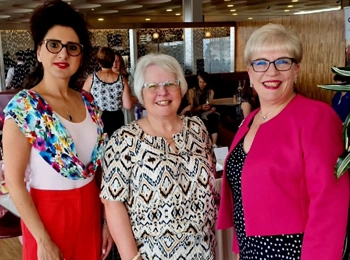
As Chair/President of Women Ahead Dundee & Angus, I had the pleasure of joining Edinburgh Businesswomen's Club (EBC) for a [...]

Yesterday's Women Ahead networking event had a touch of magic. Without prior planning, three of us business owners found ourselves [...]

About the Event Calling all businesswomen and professionals! We're thrilled that booking is now open for our upcoming "Network Over [...]

About the Event Exciting Announcement! We call all women entrepreneurs and professionals in the Dundee and Angus areas! You're invited [...]

About the Event We invite you to join us for our Annual General Meeting on Friday 12th April at 11.00am [...]
About the Event Exciting Announcement! Calling all women entrepreneurs and professionals in the Dundee and Angus area! You're invited to [...]
About the Event Whether you're a seasoned professional, an entrepreneur, or just starting your career, this event may be perfect. [...]

About the Event A Grateful Recap and a Bright Outlook for 2024 We are thrilled to reflect on a beautiful [...]
About the Event Connect, network, and be inspired with Women Ahead. Whether you're a seasoned professional, an entrepreneur, or just [...]

Join us at 6.00 PM on Friday 8th September at the Invercarse Hotel for a networking dinner for women in [...]

